
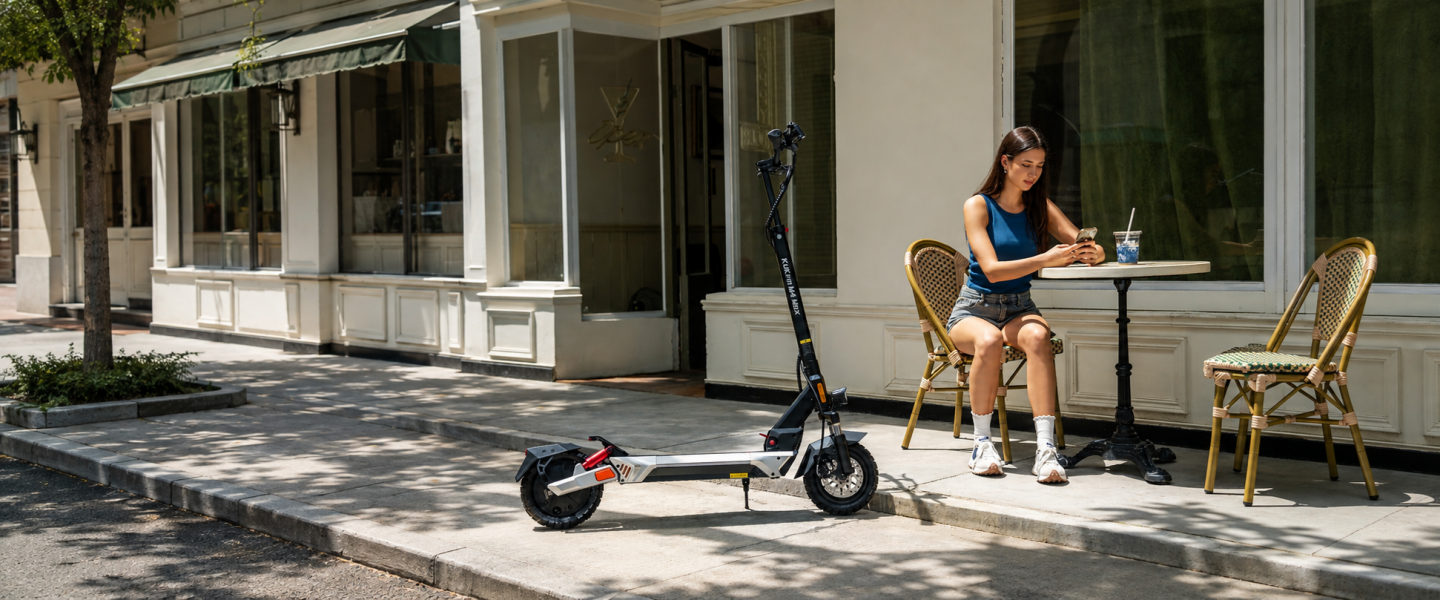
If you ride 10–30 km every day for work or school, choosing an electric scooter should not be based on top speed alone. For daily commuting, range, power, riding comfort, and how well the scooter matches your actual route are often more important than chasing the highest specifications.
If your daily route is around 10–15 km and mostly covers regular city roads, the KuKirin G2 Pro is better suited to everyday commuting. If your daily riding distance is closer to 15–30 km, or you want more range and power in reserve, the KuKirin G2 Max is worth considering.
For Shorter Commutes, Everyday Comfort Matters More
A daily commute of 10–15 km may not sound very long, but if you ride that distance on most working days, the scooter quickly becomes part of your everyday routine.
These routes often include city streets, residential areas, campus roads, or bike lanes. In this situation, having the most powerful motor is usually less important than having a scooter that feels balanced and practical for regular use.
The KuKirin G2 Pro comes with a 600W brushless motor and a 48V 15.6Ah battery, with a maximum speed of up to 45 km/h. For normal urban roads, this setup is well suited to many short- and medium-distance commuting needs.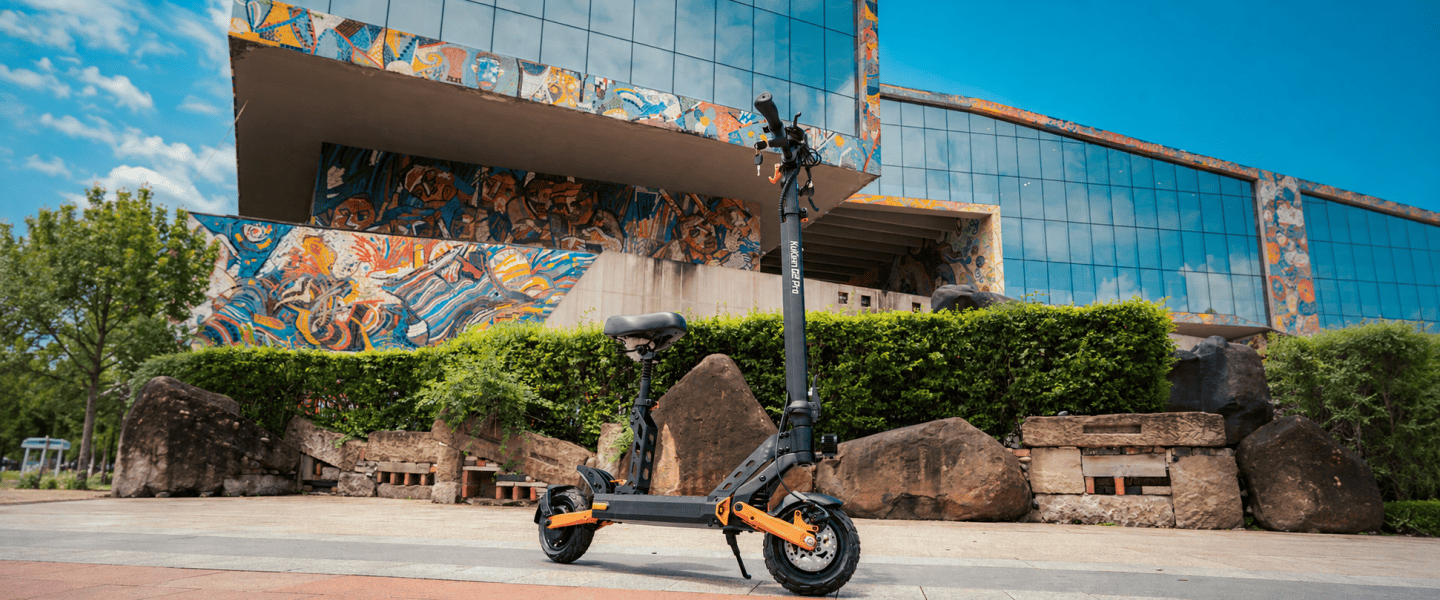
As the Distance Gets Longer, Range Becomes More Important
Once your daily riding distance increases to 15–30 km, range becomes a much bigger part of the buying decision.
For example, if your commute is 10 km each way, you are already riding around 20 km a day. Add a stop at the supermarket, a small detour, hills, or frequent starts and stops, and your actual energy consumption can easily be higher than expected.
That is where the difference between “just enough range” and “comfortable range reserve” becomes noticeable.
The KuKirin G2 Max features a 1000W motor and a 48V 20Ah battery, giving it more power and battery capacity for longer daily rides. For commuters who travel farther, or for riders who also want to use the scooter for weekend trips, this extra reserve can make everyday riding more convenient.

Your Daily Route Matters Just as Much as the Distance
Two people can both ride 20 km a day and still need very different scooters.
If most of your route is flat and smooth, you may not need especially high motor power. But if you regularly ride over bridges, slopes, or roads with frequent elevation changes, having more power in reserve can make the ride noticeably easier.
Road quality also matters. If your commute includes speed bumps, road joints, rough pavement, or uneven surfaces, suspension, tires, and overall stability become much more important.
Storage is another factor that is easy to overlook. If you need to take your scooter into an elevator, keep it inside the office, or occasionally place it in a car, the scooter’s size and everyday practicality should also be considered.
So choosing a commuter scooter is not simply a matter of matching one model to one distance. Distance is only the starting point. The road you ride every day matters just as much.
Real-World Range Is Not Always the Same as Claimed Range
Many riders look at the maximum range shown on a product page and compare it directly with their daily commute.
In real-world riding, however, range can be affected by rider weight, speed, temperature, wind, hills, frequent acceleration and braking, tire pressure, and other conditions.

Once you start using an electric scooter every day, the biggest specification on the product page is usually not what you think about most.
When you are rushing to work in the morning, you care about whether the battery will comfortably last the trip. After a long day, you probably do not want to spend the ride home worrying about remaining range. And if you suddenly need to take a detour or ride up a steeper road, you want the scooter to handle it without turning a simple commute into a problem.
In the end, the right commuter scooter comes down to the route you already know so well: how far it is, whether there are hills, what the road surface is like, and how many trips you make each day.
Erica